My Travel Map

Wednesday, January 26, 2011

My trip to Kuala Lumpur, Malaysia and Singapore, July 2010

This was my first trip on a budget airline (Air Asia); it definitely changed my opinion of budget airlines. This trip is more a business development and prospecting trip rather than an assignment. On the surface KL does look developed. However I have my doubts regarding the psyche of the Malaysians. I took in the usual site such as the Petronas Tower etc. The weather, the fauna and flora resembles Colombo; I did not enjoy the high humidity and the afternoon thundershowers.

Singapore was as usual (I have stopped counting the number of times I have been there) very orderly and hit the usual shopping and fun places. In my opinion the Singaporeans have not only developed in terms of the look and feel of the place but also in terms of the psyche of the people. I truly believe that they do think like westerners and the Japanese.

Let me give a classic example. As mentioned earlier I went to Malaysia and Singapore during the monsoon season and I made an observation. In KL when it rains; like in Sri Lanka the people stopped what ever they were doing and took shelter from the rain. Those who even had umbrellas took shelter as it appear they did not want to get there footwear wet.

However, in Singapore it was very different. I happened to be out one day early morning (going for a walk) when it started to rain. I was walking pasta a primary school and this is what I saw. A teacher was leading a group of very small children (6-7 years) who were clad in rain gear and they walked in a line and came out of the premises and they walked to the MTR station and got in to the train. Undoubtedly they were going on some sort of educational trip. What does this mean: In my opinion the Singaporeans are teaching their children to face obstacles and overcome / work around / find solutions to them. This is the essence of the psyche of an industrialized nation as opposed to an agrarian nation which generally accepts the affects of the elements as “gods will” or “karma”.

So even the very small children are trained to deal with a simple thing as the rain and have an attitude of using the right equipment to allow them to go about their daily business. So in adult life they do go and conquer the world economically.

I can certainly say that in Sri Lanka the vast majority of people have this agrarian psyche. Based on my observations it seems that quite a number of people in Malaysia still do too. So the challenge for those of us who have the privilege of influencing people is to; in some way contribute towards instilling the right attitude rather than anything else. I can say from my experience as a consultant and a trainer I derive more satisfaction in seeing this than my clients make huge profits. I say this because these individuals with the right attitude have the potential to influence / be a role model for the masses in these underdeveloped countries.

Wednesday, May 26, 2010

My trip to Hanoi, Vietnam

I returned to Vietnam to facilitate a 2 day planning workshop for the 6 organizations that I did the capacity assessments in January. It felt good to meet everyone and catch up. The workshop went smoothly and I had very positive feedback from the participants.


I was happy to see people genuinely interested and participating / contributing towards the workshop. This ensured a high quality of the results and the buy in by the participating organizations. I put the success of the workshop down to the following:


  1. The CEO / Executive director (ultimate boss) of the organization participated

  2. They had read the organization capacity assessment report and were familiar with the contents.

  3. They were guaranteed of a tangible workable plan at the end of 2 days.

  4. Being open and willing to learn

There is a chance that I may be requested to do some more work for them in the near future; however it seems that this is the end of this phase and the client is happy with the results.


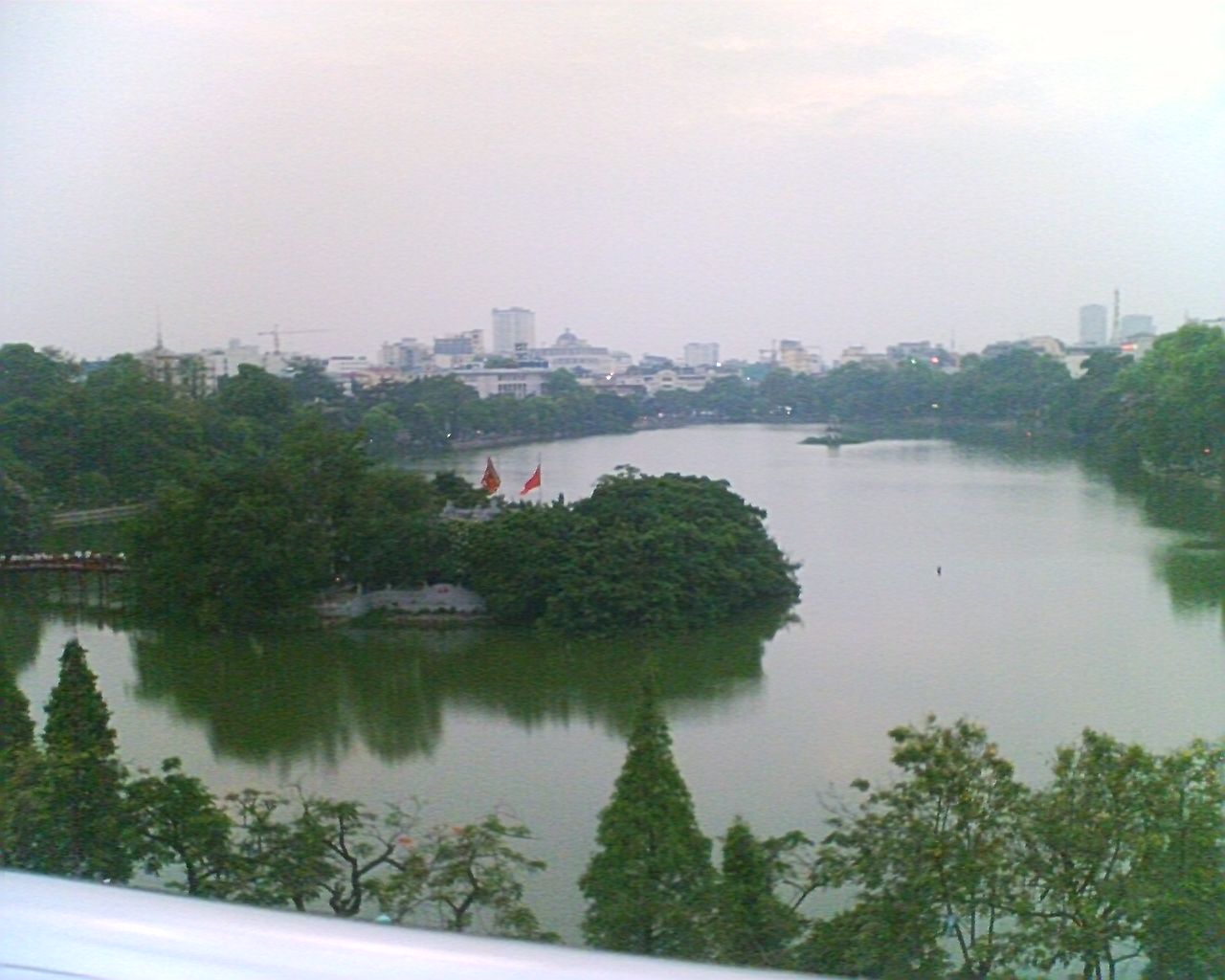
The view from the roof top restaurant near Hoan Kiem Lake.

I stayed at the Trang An hotel; It's in the center of Hanoi, near Hoan Kiem Lake, so quite convinient for walking around, shopping, finding nice restaurant, etc... Had a good time too.

Monday, April 26, 2010

Mt Trip to Manila, Philippines cont……..

I returned to Colombo on the 19th morning without any delays. On the way I met one of my colleagues at Bangkok airport and that helped pass the time as well as chat on the plane.

I found an interesting article on the web regarding “don’t know that you don’t know” I found the article to be spot on and very helpful in understanding this phenomenon. http://www.doceo.co.uk/tools/knowing.htm Now I can start to develop some strategy to work around this problem so that I am better prepared to face such an issue the next time around.

I finished documenting the results of the workshop in Manila and sent the results for comments from the client. I am still waiting for the results. Hope I am able to finish this assignment this week as it has the potential to get delayed and get ugly.

In terms of my future travel plans there are no assignments where I need to travel overseas at present. The assignments I have lined up are in Colombo. However things can change very quickly.

Friday, April 16, 2010

My Trip to Manila, Philippines

The assignment in the Philippines is to review a Strategic Plan which has been developed with the assistance of another consultant. On first glance of the plan it was not constructed in a logical way. The SWOT analysis was not used to look at strategic options. The whole plan is just a list of SWOT elements and clubbing of current activities in to 12 areas of work and finally selecting 6 areas which they call strategies and allocating opportunities and threats that are relevant to these selected 6 areas. They have not used the strengths and weaknesses.

The previous consultant does not seem to have a grasp of the logic in strategic planning; the need to start with the external factors that influence the organization and then move inside the organization.

The staff of the organization also seems to be very new to planning let alone strategic planning and have an aversion towards prioritizing and selection. As usual they seem to want to do everything. So all in all the previous plan does not have a logical flow as well as the choices the organization has made in order to mobilize resources and achieve the mission.

My task of reviewing the strategic plan was made a lot more difficult as there were representatives from a funding organization who along with the staff thought they knew everything and in reality they “did not know what they did not know”. I some times wonder why they hired an expert if they think they know everything.

They are more interested in retrofitting “logic” in to the current plan! Go figure! In effect they want to create a strategic plan breaking all the rules. I had a tough time to pull them into the right path. It seems that the organization/staff are not willing to change their current operating mode of adhocracy to a more strategic, structured logical way. So I explained that until the willingness to change is there the strategic plan will continue to be just a piece of paper.

Now I have to do the documentation. Hope to finish it as soon as possible. Looking forward to returning to Colombo; Manila is too noisy for me and for some strange reason I do not seem to like Manila. Well I have finally found a city that I do not like.

Monday, April 5, 2010

My trip to Dhaka, Bangladesh

It was quite an intense process to pin down the existing system. It existed in bits and pieces in various places of the organization managed by different people in the structure. It was quite unique to find an organization with a finance management system spanning from resource mobilization (Income generation, contracting and applying for donor funding) to implementing through 3rd parties (implementation through contractors as well as other civil society organizations) but not to have it documented any ware. It was a tough job to get agreement on the current practices as well, as each individual seems to have tweaked it to suite his/her requirement. Finally we documented the entire system as the minimum agreed common current practices.

This is typical of an organization which has grown organically and reached a point that does not allow it to grow any further without structure and form in its organization structure and systems. As a result of this the assignment has ballooned into a much bigger assignment as the organization needs basic guidance regarding system development and management. I was also able to analyze the system and suggest some key improvements (fundamental stuff really) to instill the use and management of the system. The client has now requested that I support them in the preparation for implementation which needs a lot of pre planning and documentation in the form of developing policies, manuals, forms, job descriptions, task calculation etc. It also means that we have to design the administrative and functional structure so that the organization can manage a decentralized finance function spanning the entire spectrum of financial management.

I left Dhaka on Friday and headed back to Colombo. The flight from Dhaka to Bangkok on TG was fine and operated on time. I had a 5 hour stay in Bangkok before I took the flight to Colombo. I must say that I don’t find the new airport at Bangkok as passenger friendly as the earlier one. The new one however is big and posh but it has lost some of its coziness in my opinion. As usual the Colombo flight was delayed for over a half an hour and once in Colombo had to endure the long queues at the emigration counter.

I am back in Colombo and back at work to finish another assignment (OCA) I took concurrently and had a junior consultant do some parts of it. I have to send its draft report by the end of business 6th April. My next assignment is going to be in the Philippines and looking forward to it as it will be my first assignment in the Philippines.

Friday, March 26, 2010

My Trip to Dhaka Bangladesh

I arrived in Dhaka, Bangladesh on the 24th of March for my next assignment on Financial Management Systems. The organization contracting me has some issues with its financial management system and has received recommendation from the auditors to fix these issues. Further they want to conform to the South Asian Federation of Accountants Standards. So my task is simple. Document the existing practices at the organization and get agreement on the current practices and then recommend changes and improvements to the system.

Well even though it is simple there can be quite a few things that can pose a challenge to this type of assignment. I already encountered one on the first day of my assignment (25th); which is, in a group of around 20 finance staff it was quite difficult to plot the current financial practices using flow chart symbols as non of them knew the current system in its entirety. It is still work in progress and I hope to have it pinned down during the next working day which is Saturday (Bangladesh uses the Islamic calendar); where the staff have agreed to come to work.

The last time I was in Bangladesh was way back in January of 2008; so it was good to come back to Bangladesh and to see how things are. I must say that the only thing that looked to have changed is in fact the increase in motor traffic. It takes for ever to commute on Dhaka roads. I am staying at the Ambrosia guest house in Dhanmondi where I stayed during my earlier visits to Dhaka. It felt good to be here where the staff recognize and remember you after a long absence; it really does feel like home when you are greeted by familiar faces.

Looking forward to the next few days of the assignment; it is scheduled to end in early April and then I have another assignment lined up in the Philippines.

Wednesday, March 10, 2010

Limitations of Organization Capacity Assessment (OCA) tools

Since April of 2002 I have been involved with Strategic Planning, Restructuring, Re-engineering, Organization Revival, Organization Analysis, Organization Capacity Assessment and Organization Development projects across sectors and boarders. Most of the tools that ate used for this purpose can be traced back to a few general tools which were made famous in the latter part of the twentieth century. Increasingly I have felt the need to further customize these tools in a way that they become more relevant to the current context. This customization has been happening in the past and continues at a faster rate at present.

The single biggest reason that I attribute for this need is that; today we live in a technological age which has some peculiar characteristics. The characteristics are that we need to innovate and improve not only our products but also how we do things inside the organization at a faster rate. This is nothing new; most of the thought leaders of our time have made big bucks selling this message repackaged with additional jargon. These characteristics currently affect most of the knowledge based industries. However as time goes by their affect on every organization be it government, private or development sector will grow exponentially.

As mentioned above since we have to improve the way we do things inside an organization we run into the human dimension of things. We are also aware of the “change management” that needs to happen inside the organization to facilitate the “keeping up” with the changes that drive our organizations toward bigger and better things. However we don not consider that some of the changes required may be limited by the knowledge / intellectual capacity of the staff (here staff include owner directors, CEOs, CFOs, CIOs, and CKOs). In some organizations we may have staff that has reached the limit of their intellectual prowess. When an organization reaches this level it is said to have arrived at the door step of “mediocracy”

The current tools that most of our contemporary consultants use for organizational diagnosis will not help identify this issue of “mediocracy”. However there are some characteristics that are peculiar to these organizations where they have reached the glass ceiling of intellectual limitation / mediocracy. Let me take a few cases from assignment that I have done in the past and elaborate this.

The 1st example that I would like to take is an ICT company that started over 25 years ago. The organization has been fairly successful in keeping up with the changes in the ICT technology; and has been making above industry average, earnings per share. However in the early 21st century there was a need to re-strategize to keep up with the faster pace of change in the ICT technological environment. I was invited to develop a new strategic plan for this organization. By this time I had already identified some of the key markers of an organization that has reached its pinnacle based on the intellectual capacity of its staff; and I was able to identify them in this organization during my first meeting with the senior management of the organization. I suggested to the Managing Director who invited me that the organization not only needed a new strategic plan but it also needed a corporate renewal plan and a VRS. This suggestion was not looked at favorably and I was asked only to develop a strategic plan.

The markers that I identified were:

1. The organization starts adding parallel value chains to the existing organization structure.

2. Organization does not move forward or backwards in the value chain

3. The organization does not spawn new businesses that are “stars” / neither are they known for any innovation (other than the innovation of some of the principles / 3rd party brands that they may represent)

4. History of young star performers leaving the organization on a continuing basis

5. Boasting of people (the young starts) who have left the organization and gone to achieve great things as been trained at this organization.

6. Long serving staff in a particular discipline / technology / expertise

7. Some staff that leave the organization after a few year (not the stars) join the organization again as a manager or a senior in the same field of expertise

8. Staff talk of the same obstacles that they face every year (one years experience repeated over many years) as opposed to innovating / re-engineering / work-a-rounds to overcome obstacles

9. Large number of managers based on technical areas as opposed to value addition

10. Staff do not take up higher education or professional development

11. Average age of staff moves parallel to the age of the organization

The above 11 markers as identified by me is a clear indication that the organization has run out of ideas and the incumbent staff are not able to get the organization out of the hole that it has dug for itself. They need fresh blood and a new playing field to continue being profitable. In its current state it will just survive but never reach its former glory / heyday it enjoyed in the beginning of its existence.

The 2nd example that I would like to take is a research organization set up to do applied economic research. This organization too has been in existence for over 30 years and had enjoyed considerable success in the early part of its existence. This organization too displayed the following common markers as identified by me earlier.

They were:

  1. Long serving staff in a particular discipline / technology / expertise
  2. History of young star performers leave the organization on a continuing basis
  3. Boasting of people (the young starts) who have left the organization and gone to achieve great things as been trained at this organization.
  4. Some staff that leave the organization after a few year (not the stars) join the organization again as a manager or a senior in the same field of expertise
  5. Staff talk of the same obstacles that they face every year (one years experience repeated over many years) as opposed to innovating / re-engineering / work-a-rounds to overcome obstacles
  6. Large number of managers based on technical areas as opposed to value addition
  7. Average age of staff moves parallel to the age of the organization

In addition they displayed the following:

  1. Doing (research) work in traditional / theoretical / safe areas as opposed to doing applied / non traditional / contentious issues based research (Not competing in your space as mentioned in the mission but trying to compete in the space that you perceive to be good at / running back to mama so to speak; relying on your academic training as apposed to innovation)
  2. Contempt / arrogance towards younger organizations (doing applied research) and relying on the age of the organization and past performance as a mark of value (of research) as apposed to quality, (rigor), and relevance to current context.

The above may be considered anecdotal by some; but over the past 8 years across 19 countries I have come across these markers with increasing frequency across private, government and not for profit / development sector organizations which are not considered to be in the knowledge driven sectors.

The question is; are we at the stage that this initial varying degree of prevalence of the markers in other sector may become the norm across organizations and sectors? Only time will tell. However, I am convinced that we are seeing the beginning of another divide that will start another wave of brain drain as organizations start to realize this phenomenon and start to poach intellectual staff from all over the world.