My Travel Map

Friday, October 10, 2014


My Trip to Japan - Kyoto, September 2014


As a practicing Organization Development (OD) Consultant it is not always that you get an opportunity to meet fellow OD Practitioners while not on an assignment. So when I got to know that the International Organizational Development Association (IODA -  http://iodanet.org/ ) will be holding their 29th World Conference in Kyoto Japan I decided to attend.

My journey was through Osaka as Kyoto does not have an international Airport. Osaka is a typical industrialised city, however Kyoto is a more historical and traditional city. If you are a first time traveller to Kyoto I recommend that you always fly in to Tokyo and take the bullet train (Shinkansen) to Kyoto. I say this as the journey from Osaka to Kyoto takes about one and a half hours by bus and an hour by train and all you see are industrial areas. However Tokyo to Kyoto by the bullet train is a more scenic one and you get to travel on the fastest train on earth.  

Kyoto itself is a clean and beautiful city with many historical sites to visit. The food too is great (of course I am biased as I love Japanese food) but choose wisely as the portions can be small. Hotel rooms are also an issue in Japan if you are not staying in a 5 star hotel, the rooms are quite small and the toilets are even smaller. I am not a big guy but I found the toilet to be ridiculously small.

As for the OD conference it was attended by a truly international delegation and I made a lot of new friends. In addition I got to meet a lot of Japanese OD professionals and make friends with them too. The Japanese people are a truly polite bunch and they are humble lot too. I look forward to an opportunity to visit this great country again in the future.

Monday, March 19, 2012

My Travel Tips

I started traveling as a consultant form April of 2002. I have now completed ten years of travel. For my assignments I travel both economy and business class and use a variety of airlines. To commemorate my ten years of traveling I have compiled some travel tips. They are aimed at reducing the stress of modern travel to enable you to have a pleasant journey with the minimal amount of discomfort and hassle.


These are my top travel tips based on my travel experience since 2002 and the post 9/11 world. (E6K9HKXKPPNE)


Clothes and shoes


1. Do not wear a belt – this will help you to pass through security without having to go through the hassle of taking it off and putting it on. It also helps in blood circulation.


2. Do not wear any items of clothing which contain metal buttons, clips, labels etc.


3. Do not wear clothing with a lot of pockets – you can forget a coin or a key and will set off the metal detectors


4. Do not wear tight clothes this will cut your blood circulation and make the journey uncomfortable.


5. Don’t wear baggy clothes; wear comfortable cloths that are close to your body – lets face it you will be profiled no matter what they say; so wearing baggy clothes sets off alarm bells with the security personnel. They are more likely to pad down a person wearing baggy clothes as opposed to someone wearing well fitting clothes.


6. Try to wear slippers or sandals, if you feel clod wear a pair of socks with the slippers or sandals. If you need to wear shoes wear thin sole shoes (without any metal fittings) with no shoelaces. This will either negate the need to take off your shoes or make it easy to take off and put on shoes


7. Try to dress in the thinnest possible layers of clothes instead of wearing / carrying bulky heave jackets / coats so that you can remove or add depending on your level of comfort. Thin clothes weigh less take less space in your hand luggage / carry on luggage.


Money and Travel Documents


1. Do not carry any coins. If you must carry coins in a small transparent plastic bag and put the coins in a pocket of your carry on luggage.


2. Always carry more than one currency: example if you travel via to London to USA carry British Sterling Pounds as well as Dollars.


3. Try to pre pay for as many expenses as possible before departure. This helps to minimize the amount of money you need to carry, as well as be able to bargain to the maximum and not be made to decide on the spot about your travel options. Use the internet and always cross check and read reviews of restaurants, taxi service and other services you are likely to pay for in cash so that you don’t get taken for a ride.


4. Carry globally accepted credit cards as a payment option and for emergencies.


5. Always take travel insurance; you never know when you might fall sick or get injured.


6. Always carry your passport, visa, travel insurance, hotel reservations, travel vouchers, invitation letters, letters of sponsorship etc in one safety pouch / folder. This way you don’t have to look for them in multiple places. Keep them safe and close to you.


7. Never ever give the bag containing these documents to anyone (except your family or personal assistant / colleague).


8. If you are using a VIP service to breeze through emigration and customs make sure that you have line of sight of the person at all times. Confidence tricksters pretending to be service providers will walk off with your belongings.


Baggage


1. First check the weather of your destination (12 hours before departure – weather forecasting gets better when nearer to the dates concerned.)


2. Finalize your clothes 12 hours before you travel, based on above.


3. Choose clothes that can be mixed and worn: Take white shirts / blouses which can be worn with any pants / skirts and jackets. Take a few different ties / scarf and accessories so that you look different but use the least number of clothes. I am a firm believer in the use of hotel laundry services. I prefer to get the items laundered at the hotel and avoid carrying your entire wardrobe with you when you travel. Make sure that you as well as the hotel has a clear understanding of the difference between dry cleaning and washing of clothing items.


4. Try to use the minimum number of bags as possible.


5. Golden rule is that: if you do not need an item during the journey / flight, then it goes in with the check in luggage. One of the benefits of the post 9/11 world is that the airline industries ability to track and link you baggage to you has improved tremendously. So you do not have to carry any back up clothes in your hand luggage just in case your luggage gets lost.


6. If you do not have any check in luggage then you need to ask the question do I really need to carry the item or can I buy it at my destination and use it. Remember most consumables (Soap, Shampoo, Mouth wash etc) are similarly priced everywhere and most hotel now provide them in the room). It’s worth trying a new brand of an item to reduce the weight and hassle of taking them in 50 ML clear bottles etc.


7. Have a good idea of your baggage allowance. Especially if you fly economy class; it may change from airline to airline. The rule of thumb is that if it is difficult for you to carry your check in baggage (Standard international size) it is probably over weight. An average person can easily handle 20Kg. Use this principle when standing in check in queues. Avoid standing in queues with people who have difficulty in handling their luggage. They will take longer to check in as they will have to pay for excess luggage or repack them.


Loyalty Cards


1. Try to get as many loyalty cards as you can. Before you embark on your journey have the relevant loyalty cards sorted out and keep them with your travel documents and put the rest in you carry on luggage. You never know when they may become handy.


2. In my opinion the top benefits of loyalty cards are:


a. Priority check in – the shorter the queue you need to stand in the less stressful it is to you.


b. Excess baggage allowance – you never know when you might need it, especially if you travel with your wife / partner who will shop while you are attending to business.


c. VIP services for priority emigration and customs clearance.


d. Access to a lounge with free broadband internet connection


I recommend you go for loyalty cards that provide at least one of these benefits and not bother with ones that just offer air miles for ticket discounts and free food.


Hotels


1. Where ever possible I recommend you insist on staying in an establishment with at least a 3 star classification. This should provide good enough comfort & facilities for a business traveler. However I have come across many hotels which are classified as 3 stars but are more like cattle sheds. If clients and budgets permit always stay at the highest class hotel in your destination.


2. The main facilities you should be looking for when selecting a hotel are:


a. Airport pick up and drop


b. Free broadband internet access


c. Complementary pressing of one set of clothes per day (shirt / blouse, trouser / skirt & Jacket) + shoe shine.


d. Free copy of the local English newspaper – This is a helpful tool to get a feel of the local environment, best places to dine and entertainment information and of course to get an insight in to what’s happening around you.


3. Always stay as close as possible to your customers / clients. This will reduce local travel time and getting stuck in local traffic, which you may not know about or will not be able to find out before arriving at your destination. Best is to stay within walking distance. By this you can avoid the need to haggle with taxi drivers every morning and evening if meter taxis are not available.


4. I recommend you stay on B & B basis; this gives you a lot of flexibility to move around the city and meet the locals during meal times. This will also help you get a feel of the general business environment, mood of the people as well as get exposed to the local culture.


Flights


1. Always use major airlines where possible. The trend now is to go for budget airlines. I too subscribe to this philosophy but with a few considerations. They are:


a. Safety – As with all one needs to be comfortable with the safety systems of the airline. Some budget airlines operate state of the art new aircraft, while others operate others which do not have a good safety record. So each of us need to make this choice for ourselves.


b. Reliability - Other than Europe and North America budget airlines are not regulated in a way they are liable for delays and cancellations. Unless you have a very good insurance policy you may run the risk of having to incur the cost of delayed and cancelled flights, additional hotel and transfer costs. Budget airlines will cancel / delay / amalgamate passenger manifests for flights if they do not have the desired number of passengers for a flight to minimize losses.


Major airlines will operate scheduled flights, and if for any reason they do cancel a flight they will look after the passengers better and try to route you to your destination with the minimum hassle.


2. Try not to use domestic airlines. As much as possible try to get to and from your destination via an international flight. Changing to domestic airlines may be cheaper but you need to consider the following:


a. How much time do you loose and is it worth. Most domestic flights operate at much lower altitudes and will fly at a lower speed. International flights will fly higher and faster and can provide you with considerable time savings.


b. You may have to go through immigration in one airport and through customs in another airport. This may actually take a longer time.


c. You will increase you total transit time (Time spent not flying) and for a business person time is money.


d. You may need to move your luggage over long distances between domestic and international terminals.


e. You may need to pay again for excess baggage


f. Domestic airlines too will cancel / delay / amalgamate passenger manifests for flights if they do not have the desired number of passengers for a flight to minimize losses.


g. Most domestic airlines operate very old aircraft which may have a bad safety record.


Jet Lag


1. Living in the destination time zone – From the time you start your journey try to do things such as taking meals and sleeping according to the destination time zone. This will give your body extra time to adjust to life in the new time zone. Most airlines try to do this using the cabin lights to mimic the time of day. Unfortunately only the modern aircraft have this feature.


2. Drinking fluids. – You must be well hydrated 24 hour before the flight, So refrain from:


a. Heavy exercises that make you loose water through excessive sweating


b. Drinking too much alcohol the day before you travel.


3. Reduce the build up of static electricity on your body and clothes. Once at your choice of accommodation at your destination find a wooden or cement / tile floor. Take off your shoes and socks and walk on the surface for a few minutes. The best solution is walking on grass however this may not be possible at your destination. However this may be an option for you on your return to your home.

Tuesday, December 27, 2011

My Trip to Pakistan - Islamabad December 2011

This is my first trip to Pakistan after 9/11. The last time I was in Pakistan was in 2008, most of the contacts I had made during my last visits have not resulted in any business. However I was able to secure a training assignment which; believe it or not took 2 years to secure. It just goes to show how some clients work. The need for this training was identified over 2 years ago but due to financial and other ground realities they were not able to run the training course in Pakistan.


The travel plans were made and I set off to Pakistan on the 9th of December. The journey started well as I got upgraded to business class and had a pleasant journey to Karachi. I was scheduled to take a domestic flight from Karachi to Islamabad. Things started to go bad when I landed. I made my way to the check in counter to learn that the PIA (Pakistan International Airlines) flight to Islamabad was cancelled. They just did not bother to contact the agents or the passengers to inform them of the cancellation. The PIA ground staff were however polite and quickly arranged me to stay at the Airport Hotel and take the first flight out to Islamabad on the 10th morning. I had to call my client and the hotel in Islamabad to inform them of the changes to my itinerary. Hurrah to mobile roaming!


My perceptions of an Airport Hotel were based on the other airport hotels which I had stayed in (Dubai, Bangkok, Amsterdam); however the Airport Hotel in Karachi is another matter altogether. It is a real dump. I am not running down Pakistan or its people as I have stayed in very good hotels in Karachi and Lahore on my previous visits to Pakistan. This was a real house of horror. The rooms were dirty and smelly, the bathrooms were dirty and the dining hall was something else altogether. The table cloths were full of food stains and looked like they have never been bleached since the day they were made.


The management of this hotel needs major overhauling if it is to be an airport hotel. The staff of the hotel belongs in a farm looking after animals and not in a hotel serving weary travelers. They have no idea of how to handle guest in the hospitality industry.


I left the hotel early morning (on the 10th) and made my way to the airport to catch the flight to Islamabad. Things ran smoothly from then on and reached Islamabad on time. I was met by the Islamabad Hotel (http://www.islamabadhotel.com.pk/ ) representative at the airport and was taken to the car park to embark on the short drive to the Hotel. In the car park I saw this amazing site of a fork lift being used to move cars that had parked violating the parking rules.


I settled in at the hotel and met the client in the evening to prepare for the start of the training. The training on Institutional & Organizational Development will run for 5 days with 25 participants.


The first day of the training went well and the atmosphere in the training room was good and positive the client was very happy at the end of the day and was keen to keep the same momentum during then next 4 days.


The second day of the training also went along as planned and was well received by the participants. After the training I went to the shops (Jinnah Super Market) with one of the participants as my guide. Islamabad boasts of quite a few good shopping areas with some well stocked shops in clothing. The main thing that struck me is that you do not see poverty on every corner. Islamabad seems to have a majority of middleclass to upper class people living in the city. Quite a contrast to Karachi and Lahore where you do see poverty as it is common in other cities of South Asia.


The third day of training went smoothly without incident. After the training I met the managing director of a company which I met last when I was in Lahore in 2008. We were unable to build a working business relationship since we last met (9/11, war in Sri Lanka and the deterioration of the security in Pakistan which led to the Sri Lankan cricket team being attacked). We discussed the opportunities for joint collaboration and agreed to take the business relationship to the next level. Only time will tell is we are able to do this.


The fourth day of the training too went well and we will be going out for dinner with all the participants. We all made our way to Monal Restaurant located about 4000 feet above sea level (http://themonal.com/monal.htm ) at the top of the hill at Margalla Hills National Park for a night time view of the city of Islamabad.


I recommend to all who visit Islamabad to go for dinner at this restaurant, the view and the food was exceptional and so was the service. After dinner we went to Gelato Affair (www.gelatoaffair.com ) at the Gole Market to have dessert. The ice cream selection available was enormous and great tasting.


The last day of training went according to plan and was able to conclude the training program on time as planned. The participants were appreciative of the efforts of the trainer and received excellent feedback through the training evaluation. After the customary goodbyes and promises to keep in touch we concluded assignment.


The trip back to Colombo was on schedule; unlike while arriving at Islamabad the flight back to Karachi was on time and managed to arrive at Karachi without any hassle.

Monday, August 1, 2011

My Trip to Bangladesh June 2011. Cont…..

The assignment is now over; managed to progress the milestones without much trouble given that I lost a total of 4 days to strikes. The draft evaluation report was well accepted by the client; now comes the tricky part getting comments on the report. There are basically 2 types of comments that a consultant is likely to get on a report. The first being, comments regarding the structure / formatting and style of the report and some times regarding the language. We have all had different educations and are used to a particular vocabulary; further at some point in our lives we have written a report and we generally stick to that structure while accommodating subject related topics. My rule of thumb is that I give in to these requests as it is just not worth the discussion regarding it. I prefer to use that time for some thing else. The second being, comments regarding the contents such as findings, recommendations etc. Here I generally play hard ball, unless I am presented with an argument backed by facts / proof. This goes to the hart of your position as an independent, unbiased professional consultant. I look forward to these comments as they challenge your thinking and help you to be a better consultant as well. I am supposed to get all the comments by next Friday as the end of the assignment / submission of the final report scheduled after 2 days of receiving all the comments.
During my last week in Dhaka my health deteriorated (food poisoning). My fault for eating some pastries (short eats) offered to me during a meeting. Momentary laps of concentration. . I have been coming to Bangladesh since 2006 and this is the first time this happened to me. My dread was the journey back to Colombo which I made with the aid of Imodium. I know this drug is banned in some countries but it is a life saver when traveling.
I do not have any other assignments lined up at this moment. Now that I am back in Colombo I need to tie up some outstanding issues. These are in fact 3 reports, 1) finalizing the report for the current Bangladesh Assignment, 2) finalize the Strategic Plan for my client in Batticaloa and 3) Submit a reflection I did for myself for the institute of consulting.

Friday, July 15, 2011

My Trip to Bangladesh June 2011. Cont…..

The journey to Sayedpur went without a hitch. It was an 8 and a half hour drive and it took us through the country side of Bangladesh. It is all green and looks wet. You can’t get behind the fact that how featureless the geography was it was miles and miles of paddy field in absolutely flat ground. The poverty is also in your face all the time. The good thing was that I saw the people doing what they can to get ahead. The more rural it got the less begging I saw on the streets. The rural folk are a really hardworking lot; you got to come to Bangladesh to see “human power” at work. It was amazing to see it. I stayed the night in Sayedpur and went to visit the partners and other stakeholder in the Dinajpur District and returned to Sayedpur for the night. The pattern was repeated in the next 2 days visiting Nilphamari and Lalmonirhat districts.


On the way I encountered a road sign that I have not come across before; which is a sign for a “local market”. I thought this was brilliant as we all know how the supermarkets can get their branding across with the power of money. Guess the rural folk got the local authorities to go one better, good for them.


As mentioned earlier the geography in the Northern area of Bangladesh was indeed featureless. However the locals in the Lalmonirhat assured me that they can see the Himalayan Mountains on a clear day and told me to look for it at the Teesta River Dam / Bridge. For my bad luck it was cloudy and rained for the best part of the day. Anyway, this is the view from the Teesta River Dam / Bridge in the direction of the Himalayan Mountains.


On my way back to Dhaka I visited the archeological site “Mahasthangarh” an ancient Buddhist city which was later inhabited / colonized by Muslims and Vasu Bihar a Buddhist university during the period.
Mahasthangarh

Vasu Bihar
I also visited the museum and saw what was left over after the customary destruction of all effigies and other objects in the face of islamization that took place. The Buddhist and Hindu statues with the head chopped off or the face chopped off as well as some with tool marks but still intact. It is great to see the Bangladesh archeology department taking an effort to preserve the history of this nation and do it in a professional manner with the little resources they have, for the future generations of Bangladeshi’s. Being a part of good old India in the past, Bangladesh is quite rich in archeology with at least a dozen major archeology sites that can be turned into major tourist destinations. I saw quite a few Hindu landmarks / tombs surviving to this day in the North outside of major archeological sites. However I did not see many Buddhist landmarks except a few Bo-trees which looked really old with some sort of earth / stone / brick arrangement around them. I did not see any churches.

As mentioned in my earlier blogs, one of the strikes that took place was because the current government amended the constitution to reflect Bangladesh as a secular society. The “religio-politicos were not happy about it. Most of my Bangladeshi friends are embarrassed when faced with stories of persecution of Buddhist, Hindus and Christians in Bangladesh. In their mind Bangladesh is and should remain a secular country with religious freedom. The assignment continues and I look forward to the next few days as the data collection period is coming to an end.

Monday, July 11, 2011

My Trip to Bangladesh Cont.....

The assignment is proceeding well, the evaluation questions have been designed and the questionnaire and show cards are prepared and translated in to Bangla. I will be using an “In Depth” interviewing technique. The evaluation itself has 2 aspects to it. Firstly; to looking at the internal mechanisms which either makes them effective or not as the case may be (As an internal service provider) and; secondly, getting conformation from outside the Unit (As an external service provider) to establish if they were effective. The main internal interviews have been conducted and now I have to conduct the external interviews. The external interviews are going to be held in the districts of Dinajpur, Nilphamari and Lalmonirhat. I will have to undertake an 8 hour journey over road to get to Sayedpur where I will be based. Hope to get back to Dhaka on the 15th.

Monday, July 4, 2011

My Trip to Bangladesh June 2011

The assignment in Bangladesh is to evaluate the performance of a department within an organization. The interesting aspect is that the objective / mission of the department is, Organization Development of its other departments as well as partners of the organization. It’s going to be an interesting assignment. This will be a long assignment where I will be staying for 4 weeks in Bangladesh and travel to the north of the country.
The journey here was uneventful and arrived at my hotel tired but happy to be here. I am staying at the Asia Pacific Blossom Hotel; http://www.blossomhotel.net/ this will be my second stay at this hotel. I stayed at this hotel in 2006 during my first assignment in Bangladesh.
The assignment itself got off to a tuff start as the day of the launch of the assignment was a “Strike Day” in Bangladesh and apparently there are more strike days planned in the coming weeks. I am no stranger to Strikes / Harthal in Bangladesh and was in the thick of them when I was here on assignments in 2006 and 2008. At least this time it’s in support of oil and gas committee on the ConocoPhillips deal. The once planed during the week is for political issues; these tend to get violent and can be dangerous.

Sunday, June 19, 2011

My Trip to Batticaloa cont….

My trip to Batticaloa was one year in the making. In March and April of 2010 I was requested to do an Organization Capacity Assessment of a project which ran across 4 districts and to come up with scenarios for independent / sustainable operation. The Scenario that was selected was to restructure the project in to a single operating office in Batticaloa and to have a satellite operation in Trincomalee. It took nearly one year for the project to be restructured and to get a not for profit limited company registered. This is a rare occasion when the funders of the project seeing that the need is still there and that the services delivered through the project are still relevant wanting to develop a sustainable organization to continue to serve the public / target group. My experience in the past has been that most funders / donors say that they want sustainability but don’t put enough money and effort. “Hats off” to the funders of this project; they seem to have got it right.

This trip was to develop a 3 year Strategic Plan for the newly formed not for profit limited company. On my way to Batticaloa I took the routr through Habarana as the A 5 and the A 26 was under repair. On the way I encountered a wild elephant on the main road at around . (See my earlier post for a photo of the Elephant) It is rare to see the elephants on the road during the day. However during the night I have come across them more frequently.

The assignment went as planned and now I have to develop the documentation (Strategic Plan and the Process Document). On my way back I took the A 5 and the A26. The authorities are developing these roads really well. These roads will be fantastic to drive on once completed. It is a scenic route.

The view from the A 26 Road

Sunday, June 12, 2011

My Trip to Baticaloa

On my way to Baticaloa, This was taken on the Polonnaruwa Habarana Road today (12/06/2011) @ 2.00 PM. Wow what a Jumbo!

Wednesday, May 4, 2011

My Trip to Thailand

When traveling east from Sri Lanka I generally travel through Thailand and transit in Bangkok. However I rarely get an opportunity to meet the people on the road as I am in a rush of checking in and out of hotels and flights. In April I was in Bangkok for a training assignment and had the opportunity to interact with people in Bangkok. I enjoyed the interaction with shop keepers and street vendors. However, I saw a significant difference in the pulse of the ordinary people. There was a more tense feeling with quite a high degree of uncertainty given the political situation in Thailand. Even though the current Prime Minister has promised to hold elections the majority of the Thais feel that the Army has started a war along the Cambodian boarder to postpone or effectively suspend the constitution again.


The fight between the “old traditional Thai power base” and the “modern Thai power base” led by Thaksim. Some of the expatriates I met seem to think that Thailand is getting into a situation or a case of “Thailand having an Army that owns the country”; something similar to Pakistan. The Army seems to have a great say in the lives of the Thai people and the politicians.


Thailand still remains a polite and friendly place to visit, however it seems to have shot itself in the foot regarding the tremendous progress it had made in the economic and democratic frontiers. As I come from a country that has seen decades of civil war I hope that sanity will prevail and the Thai people can sort out their differences and get ahead.

Tuesday, February 22, 2011

My trip to Australia, Adelaide & Melbourne

The trip to Australia has many connotations, projects, jobs, fun etc. I started my journey (with my wife) without any expectations and reached my transit point of Singapore with relative comfort and uneventful. On the leg between Singapore and Adelaide we were unlucky to be seated next to a person who was clearly suffering from the flue, coughing and sneezing. When will the airlines seat such passengers in a different area of the flight? I wonder if I live to see such care by an airline; anyway reached Adelaide with the knowledge that, we have a high probability of getting the flue or at least a cold.

Australians are very strict in terms of anything you bring into Australia so being my first trip down under I din not anticipate the ques, baggage scanning and physical inspection for any food items etc. Man it just not worth the hassle to take anything to Australia. We reached out hotel (Granada Motor Inn) in the morning and had to wait for a while till our room was ready. It was a comfortable hand had a decent air conditioner coz the outside temperature was around 42 C. In the evening we went for a quick tour of Adelaide and had dinner at an award winning Korean restaurant. Dining in Australia is also a big thing.

The next day we went to an area north of Adelaide (Playford North) where a new federal government led development was being rolled out. Needless to say there are employment opportunities and project opportunities there. We met the people and had a look around to see if it was to our liking.


Between the 31st of January and the 3rd of February we were in Adelaide and had a good look around Adelaide. We ventured out alone on several occasions and found the public transport (Busses) to be the most economical mode of transport. On the 4th of February we took a tiger airways flight to Avalon / Melbourne were a friend of my wife picked us up. We went straight to the Crown Casino to have lunch. You can be fooled when you are at Crown Casino thinking you are in Hong Kong or China as 90% of the punters are of Chinese origin.


After Lunch we went to the river bank / pier where there was a street carnival on account of the Chinese New Year of the Rabbit. It was great to observe how clean the street carnival was. Guess the minute emigrants from this part of the world go to Australia they become model citizens. Wonder what makes them behave like animals (my apologies to all animals) when they are in their own country?


In the evening we went to a nearby forest reserve to see some wild Kangaroos and were treated by some good sightings. On the way back to our friends place we went to a drive in liquor store which was unique for me. I hope that they would bring this concept to Colombo.


We had a BBQ for dinner (yes I had Kangaroo stakes) and had a great time with our friends. The next day we had to head back to Adelaide so; In the Morning We went to our friend’s restaurant for breakfast ZEST 89 and drove to Avalon to get back to Adelaide. I recommend anyone who visits Melbourne to at least have one meal at the ZEST 89 restaurant it is a great place.

We reached Adelaide by mid afternoon. We then took the Mount Lofty Scenic Route and went to Cleland Park for the afternoon to see the other wild life in a park environment. Cleland Park was an education. There I was able to see the famous “black swan” in real life. It is a truly remarkable astonishing site even though you have heard about it seeing one in real life was beautiful.

We stayed in Adelaide until the 8th and took the flight back to Singapore. In Singapore we had arranged to meet some of our good friends for dinner. The immigration officers at Changi Air Port were a bit amused that we went out for 3 Hours. Anyway we returned to Colombo without incident and I am certain we will be going back to Australia in the near future.

Given the position of all the Asian countries and their role in the post financial crisis global economy Australia is a very attractive prospect vis-à-vis US and Europe.

Wednesday, February 2, 2011

My trip to Dhaka, Bangladesh, November & December 2010 & January 2011

January 2011

Back again at the Hotel De castle; it looks like I have spent more time here in the past 3 months than at home.

The original brief was to develop a Sustainability Plan for the organization. However, most managers confuse it with Resource Mobilization / Fund Raising Plans. Typically a Sustainability Plan involves a risk analysis of the organization comprising of Board, Executive Leadership, Resource Audits (Man, Money, Material & Technology / knowledge), HR, ICT, Finance and other support services systems audits plus a host of other environmental issues.

I cleared up this confusion and came to develop a Resource Mobilization Plan (Only Money); however, the team has not completed the budgets. So have to delay the process by a few days. Meanwhile I witnessed riots in Dhaka due to stock market crash yesterday. Stock price manipulation rings were very active in DSE over the past year and sent the stock prices way up beyond the wildest PE ratios possible for some companies. Just like what’s happening at the CSE in Sri Lanka. Most stocks trade much higher than PE ratio. Is this a prelude to what we can expect in the streets of Colombo I wonder?

Finally managed to develop the RM Plan for the organization; this is the end of the assignment for me and look forward to going back to Colombo.

December 2010

It’s good to be back in Dhaka and at the Hotel De Castle. Guess what its Harthal season again! I was in Bangladesh in 2006 and in 2008 for the then famous Harthal “Save Democracy” which was a success in overthrowing the elected government and appointing a caretaker government. However, during Harthal the general public and the visitors to Bangladesh suffers by having severe restrictions in free movement. I will spend 2 weeks in Dhaka for this assignment with the intention of developing the Vision, Mission, Values and Strategies of the organization.

It was hard work but managed to develop the Vision, Mission, Values and Strategies for the organization. During this process there was a one day Harthal, but it seems to have been a flop! What’s going on here, have the people finally realized not to go on Hartal for silly things? Well, we will just have to wait and see.

As part of the assignment I had to help the management team present the Vision, Mission, Values and Strategies to the board and get their comments and final approval. However there is an issue. The issue is that; the roles and responsibilities of governance and the executive branches of the organization are not clearly delineated to ensure efficient operations. In short there is a power struggle between the two. I have to manage this delicate process; otherwise all hell may break loose during the meeting and true to form, the consultant will be the fall guy.

You can read my article titled “Governance – Do we need to build capacity?” published in http://capacitydevelopment.ning.com/

The meeting with the board went off without any major hiccups and got the necessary approvals and consent for the next stage of the assignment.

November 2010

The assignment I undertook was to develop a new Vision, Mission, Values, Strategies and a corresponding Resource Mobilization plan and support services (Finance HR & IT) plans for Acid Survivors Foundation ASF http://www.acidsurvivors.org/ of Bangladesh. I will be staying at the Hotel De castle in Banani, Dhaka.

I must say that I was quite shocked at the number of people being attacked in Bangladesh and the physical and psychological damage it does to people. The major cause of attacks was economic (Dowry & Land). Given the poverty levels in Bangladesh I must say that I am not surprised. Having enough resources to go around for 160 + Million people is not a joke.

The irony is that at the United Nations (Put UN Web Site) review of the Millennium Development Goals (Put MDG review results Web Site) it was concluded that mot poor countries (including Bangladesh) were failing miserably in trying to reach the MGD’s. In my Humble opinion this is because most poor countries are not dealing with the white elephant in the room i.e. population growth. This is obviously considered a sensitive subject given the reluctance of politicians to take on the religious establishments head on be it Islam or the many denominations of Christianity. On the contrary this should be the main subject of discussion by far thinking politicians the world over.

For instance if Bangladesh were to implement strict policies to have ZERO growth in population for the next 10 years it would develop at a faster rate As even the slightest growth in the nations wealth will be held by a content population. This is common sense.

Most people misunderstand when we talk about zero population growth. They think that you are suggesting that people stop having children. In fact it does not mean that at all. It just means that your birth rate has to be equated to your death rate.

In the case of developing countries; the way that externally funded development sector project are implemented creates further frustrations within a given population and at times directly create political and social unrest. Most development sector professional (from the north countries as well as the south countries) don’t even understand this themselves. Consider the following. Most western donors advocate rights based projects. This means that all citizens will demand equal levels of services from the state irrespective of economic, social, political, ethnic or religious status. This in a developing country means that “now” 10,000 people line up for services as opposed to 1,000 people. The issue is that the rights based development project itself does not have any or enough funding to cater for the newly generated demand. The funds are only available to create and sustain the demand by the citizenry. So now the poor government has to serve a larger number of people with the same or slightly increased budget. This only means that in order to cater for the quantity the quality of services will be compromised. This is OK with the rich citizens as they can afford to pay for services by the private sector or bribe the state employees or use influence to get a better service from the state service provider.

One can argue and say that this is a deliberate attempt by some of the donors to create instability within developing countries. I am not a conspiracy theorist but I wouldn’t put it past some of them. The point is that we who hail from the developing countries must act a lot smarter than we currently do if we want to develop.

As for me the assignment will run in to the New Year and I will have to go to Bangladesh a few more times to finish the assignment.

My Trip to Male, Maldives, September 2010

The trip to Maldives was a business development trip. Most people just come to Maldives and stay in a resort and go back. I was lucky to see the Maldives by land, sea and air; as well as spending time in Male. I recommend all to see Maldives in all its glory

View of Water Villas.


View of Maldives by Air (Sea Plane)


Not only did I snorkel but I also went on the “Whale Submarine”

As a sprawling archipelago Maldives (I traveled from Male to the northern most inhabited Island and back to Male) is a breathtaking destination. However, I was shocked to see poverty in the Maldives with a population of just over 300,000. I guess corruption and discrimination is rampant in this tiny nation as well. I must say that Maldives presents a unique problem to any government in having to deliver services to small populations spread across 200 islands (Out of 1192 Islands spread across 90,000 square kilometers)


I believe the only solution is to embrace ICT and use it to reach every person. However, having said that; the ICT literacy among the Maldivian population is also very low. A real chicken or egg situation for the politicians of Maldives to solve. If ever there was a country which can be considered easy to develop it must be the Maldives.

Wednesday, January 26, 2011

My trip to Kuala Lumpur, Malaysia and Singapore, July 2010

This was my first trip on a budget airline (Air Asia); it definitely changed my opinion of budget airlines. This trip is more a business development and prospecting trip rather than an assignment. On the surface KL does look developed. However I have my doubts regarding the psyche of the Malaysians. I took in the usual site such as the Petronas Tower etc. The weather, the fauna and flora resembles Colombo; I did not enjoy the high humidity and the afternoon thundershowers.

Singapore was as usual (I have stopped counting the number of times I have been there) very orderly and hit the usual shopping and fun places. In my opinion the Singaporeans have not only developed in terms of the look and feel of the place but also in terms of the psyche of the people. I truly believe that they do think like westerners and the Japanese.

Let me give a classic example. As mentioned earlier I went to Malaysia and Singapore during the monsoon season and I made an observation. In KL when it rains; like in Sri Lanka the people stopped what ever they were doing and took shelter from the rain. Those who even had umbrellas took shelter as it appear they did not want to get there footwear wet.

However, in Singapore it was very different. I happened to be out one day early morning (going for a walk) when it started to rain. I was walking pasta a primary school and this is what I saw. A teacher was leading a group of very small children (6-7 years) who were clad in rain gear and they walked in a line and came out of the premises and they walked to the MTR station and got in to the train. Undoubtedly they were going on some sort of educational trip. What does this mean: In my opinion the Singaporeans are teaching their children to face obstacles and overcome / work around / find solutions to them. This is the essence of the psyche of an industrialized nation as opposed to an agrarian nation which generally accepts the affects of the elements as “gods will” or “karma”.

So even the very small children are trained to deal with a simple thing as the rain and have an attitude of using the right equipment to allow them to go about their daily business. So in adult life they do go and conquer the world economically.

I can certainly say that in Sri Lanka the vast majority of people have this agrarian psyche. Based on my observations it seems that quite a number of people in Malaysia still do too. So the challenge for those of us who have the privilege of influencing people is to; in some way contribute towards instilling the right attitude rather than anything else. I can say from my experience as a consultant and a trainer I derive more satisfaction in seeing this than my clients make huge profits. I say this because these individuals with the right attitude have the potential to influence / be a role model for the masses in these underdeveloped countries.

Wednesday, May 26, 2010

My trip to Hanoi, Vietnam

I returned to Vietnam to facilitate a 2 day planning workshop for the 6 organizations that I did the capacity assessments in January. It felt good to meet everyone and catch up. The workshop went smoothly and I had very positive feedback from the participants.


I was happy to see people genuinely interested and participating / contributing towards the workshop. This ensured a high quality of the results and the buy in by the participating organizations. I put the success of the workshop down to the following:


  1. The CEO / Executive director (ultimate boss) of the organization participated

  2. They had read the organization capacity assessment report and were familiar with the contents.

  3. They were guaranteed of a tangible workable plan at the end of 2 days.

  4. Being open and willing to learn

There is a chance that I may be requested to do some more work for them in the near future; however it seems that this is the end of this phase and the client is happy with the results.


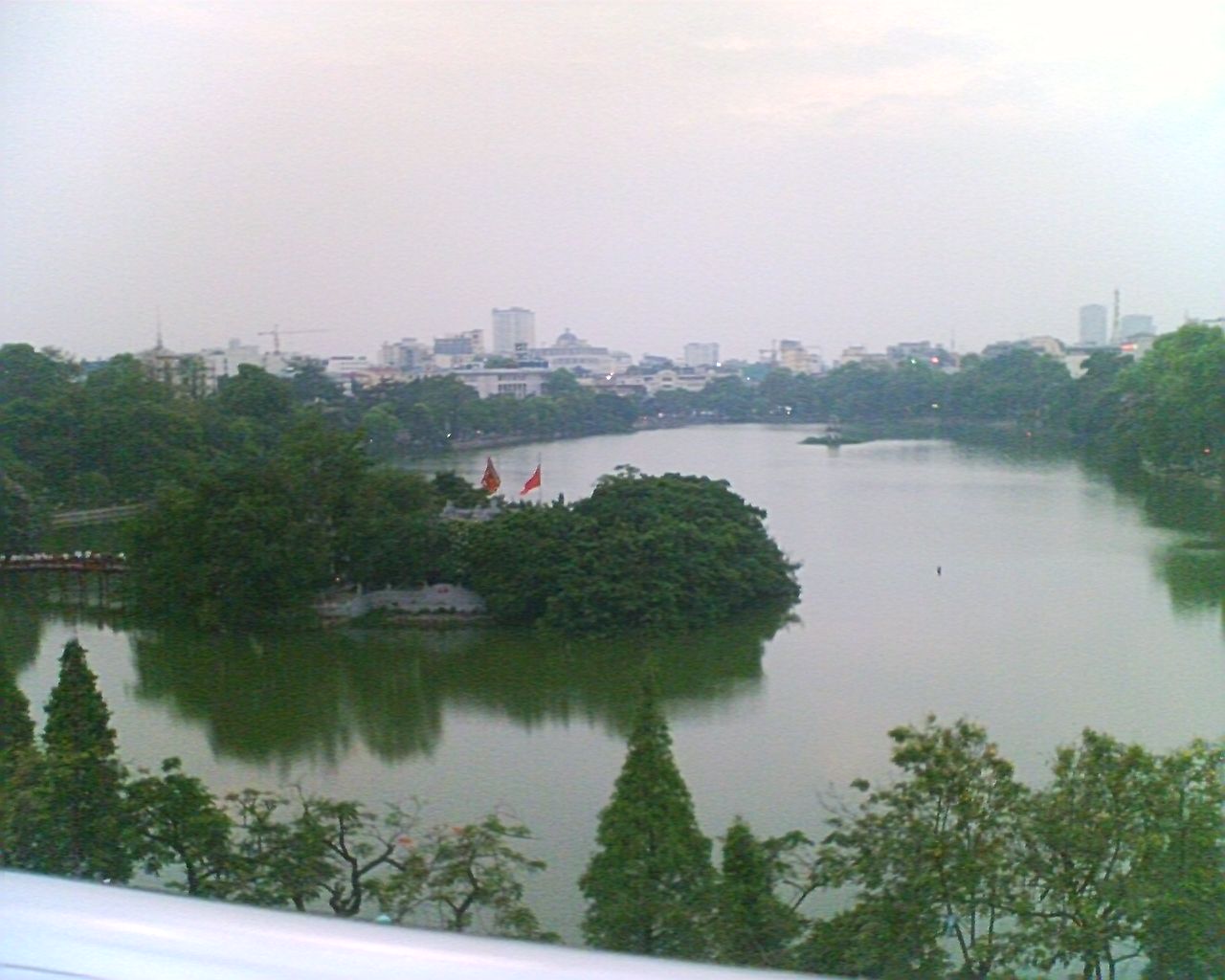
The view from the roof top restaurant near Hoan Kiem Lake.

I stayed at the Trang An hotel; It's in the center of Hanoi, near Hoan Kiem Lake, so quite convinient for walking around, shopping, finding nice restaurant, etc... Had a good time too.

Monday, April 26, 2010

Mt Trip to Manila, Philippines cont……..

I returned to Colombo on the 19th morning without any delays. On the way I met one of my colleagues at Bangkok airport and that helped pass the time as well as chat on the plane.

I found an interesting article on the web regarding “don’t know that you don’t know” I found the article to be spot on and very helpful in understanding this phenomenon. http://www.doceo.co.uk/tools/knowing.htm Now I can start to develop some strategy to work around this problem so that I am better prepared to face such an issue the next time around.

I finished documenting the results of the workshop in Manila and sent the results for comments from the client. I am still waiting for the results. Hope I am able to finish this assignment this week as it has the potential to get delayed and get ugly.

In terms of my future travel plans there are no assignments where I need to travel overseas at present. The assignments I have lined up are in Colombo. However things can change very quickly.

Friday, April 16, 2010

My Trip to Manila, Philippines

The assignment in the Philippines is to review a Strategic Plan which has been developed with the assistance of another consultant. On first glance of the plan it was not constructed in a logical way. The SWOT analysis was not used to look at strategic options. The whole plan is just a list of SWOT elements and clubbing of current activities in to 12 areas of work and finally selecting 6 areas which they call strategies and allocating opportunities and threats that are relevant to these selected 6 areas. They have not used the strengths and weaknesses.

The previous consultant does not seem to have a grasp of the logic in strategic planning; the need to start with the external factors that influence the organization and then move inside the organization.

The staff of the organization also seems to be very new to planning let alone strategic planning and have an aversion towards prioritizing and selection. As usual they seem to want to do everything. So all in all the previous plan does not have a logical flow as well as the choices the organization has made in order to mobilize resources and achieve the mission.

My task of reviewing the strategic plan was made a lot more difficult as there were representatives from a funding organization who along with the staff thought they knew everything and in reality they “did not know what they did not know”. I some times wonder why they hired an expert if they think they know everything.

They are more interested in retrofitting “logic” in to the current plan! Go figure! In effect they want to create a strategic plan breaking all the rules. I had a tough time to pull them into the right path. It seems that the organization/staff are not willing to change their current operating mode of adhocracy to a more strategic, structured logical way. So I explained that until the willingness to change is there the strategic plan will continue to be just a piece of paper.

Now I have to do the documentation. Hope to finish it as soon as possible. Looking forward to returning to Colombo; Manila is too noisy for me and for some strange reason I do not seem to like Manila. Well I have finally found a city that I do not like.